Green EDGE Data
Concept visualisation
UK · Ireland · Europe

Clean compute, where the grid can't reach.

Deployable, low-power sovereign & enterprise edge — sold, supported and refreshed with a managed energy-and-security operating layer. Renewable-powered micro data centres, built off-site and delivered complete, designed for contracted renewable supply with a battery buffer, sidestepping the multi-year grid queue.

Energy-efficient by design Designed for contracted renewable supply Grid-queue-free Deployed in weeks
The problem

The compute boom has hit a power wall

Demand for compute is soaring, but power and grid access — not chips — have become the binding constraint. Capacity can't be plugged in fast enough, and the big hubs are full.

~945 TWh
Projected global data-centre electricity demand by 2030 — roughly double 2025 (IEA).
7–10+ yrs
Typical grid-connection queues for new capacity across the UK and Europe.
Hubs full
Major markets such as Amsterdam and Dublin have curbed or paused new large builds.
What we do

A complete data centre the size of a container module

Each Green EDGE Data unit is a self-contained micro data centre — similar in size to a standard shipping container — built to spec and delivered ready to connect. Efficient, low-power compute and an integrated energy system let it run clean and quiet, close to where data is created and used.

Concept visualisation: a Green EDGE Data module inside a secure compound, with a concrete anti-ram wall, a high anti-climb fence, a vehicle gate, CCTV and external plant
Concept visualisation
  • Modular & plug-and-play — self-contained units built off-site and delivered ready to run; deployed in weeks, not grid-queue years.
  • Energy-efficient, low-power compute — a fraction of the power and cooling of conventional GPU racks, with far less waste heat.
  • Renewable + storage — designed for contracted renewable supply, with a battery buffer sized for four hours of the full load, with an optional standby generator.
  • Grid-light — a 52 kW load, small enough that a new grid connection is not the starting point, sidestepping the multi-year connection queue.
How it works

Inside the module

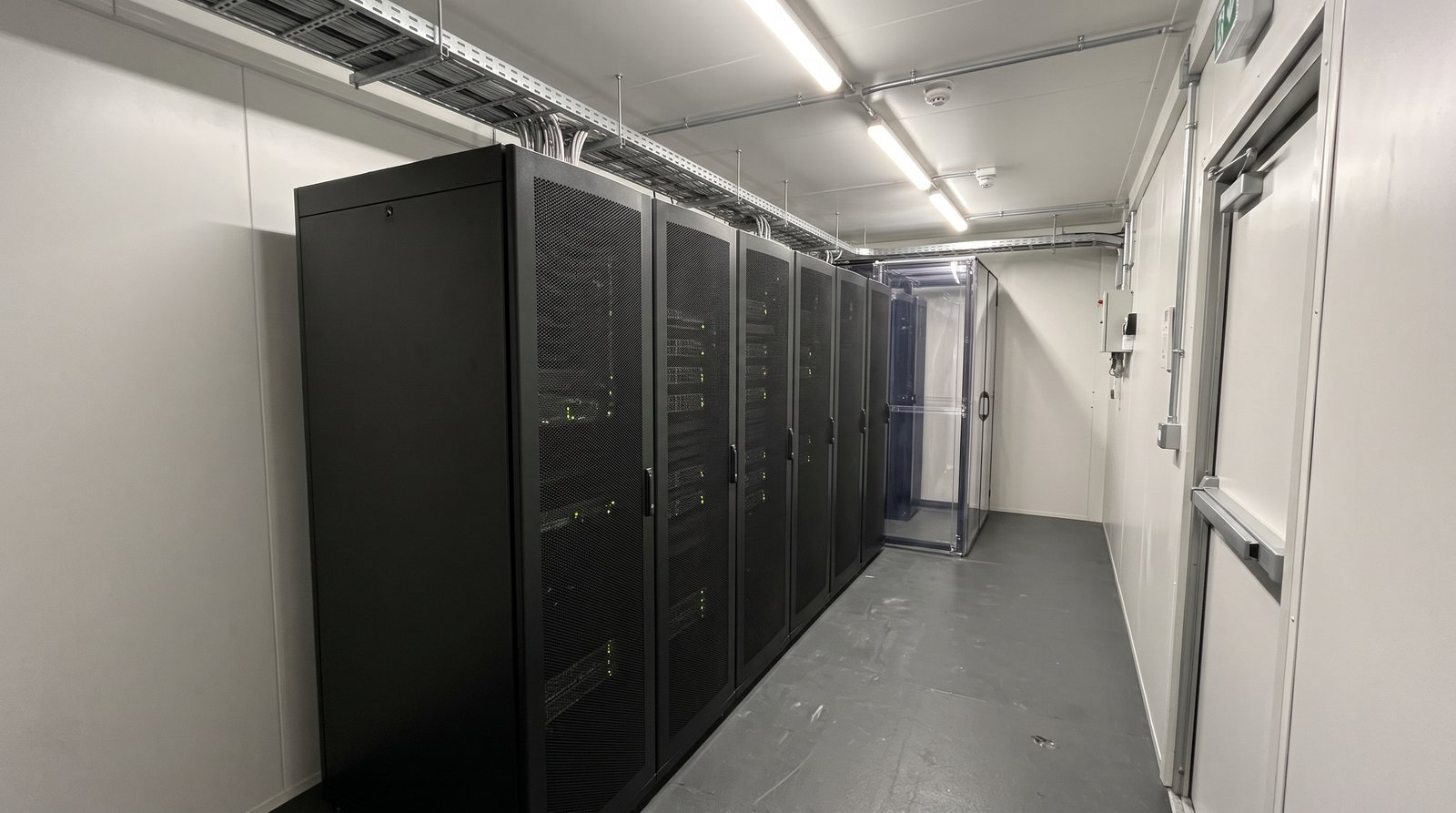
Compute, storage, power management and connectivity, integrated into one weatherproof unit and managed remotely — engineered for unmanned operation at the edge.

Concept visualisation: inside the module, a single row of enclosed equipment cabinets beside the cold aisle
Concept visualisation
⚡

Efficient compute

High performance-per-watt, low-power servers — simple cooling, minimal heat.

🔋

Storage

A battery buffer between the supply and the compute, holding the full load for four hours if the supply is interrupted.

⚡

Supply

Designed for contracted renewable supply (none yet signed), with an optional standby generator as a safety net.

🌐

Connectivity

High-speed fibre and low-latency network access at the point of demand.

Why now

Four tailwinds, all accelerating

Edge AI

Inference is moving out of the core and toward users and devices.

5G & MEC

Low-latency services need compute at the network edge.

IoT

Tens of billions of connections — process locally, don't backhaul.

Regulation

EU rules increasingly favour low-carbon, renewable-powered compute.

Solutions

One platform, many edges

Compute for the workloads that need to live close to users — delivered as a turnkey module you own, supported and refreshed by us for its whole life.

📡

Telecom & 5G edge

Modules at towers and exchanges — the low-latency anchor.

🧠

Edge AI inference

Run inference close to users and devices, not in a distant core region.

🏙️

Smart city

Traffic, public-safety and environmental compute for councils and partners.

🏢

Enterprise edge

Low-latency private cloud and data locality, on-site or nearby.

🎬

Content & caching

CDN edge nodes, gaming and community cloud, closer to the audience.

🌱

Sustainability & Scope-3

Renewable, low-PUE capacity that helps customers cut their emissions.

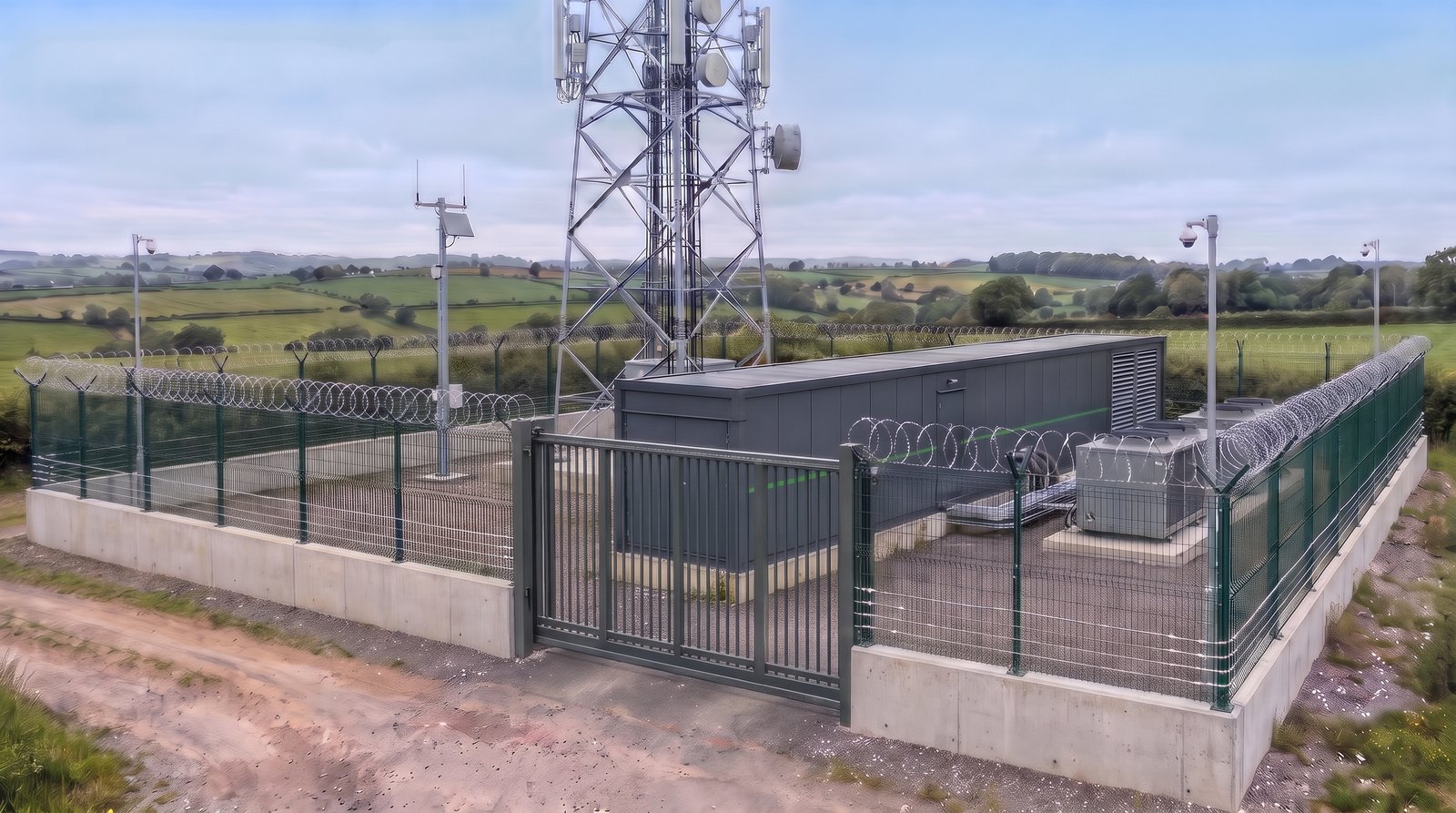
Concept visualisation: a full-size Green EDGE Data module beside a telecom mast, inside a secure compound with an anti-ram wall, a high fence, a gate and CCTV
Concept visualisation
Telecom & 5G edge · the anchor

A module of your own at the mast

A self-contained module at towers and exchanges delivers mobile-edge compute exactly where it's needed — yours to own and to host whoever you choose, installed inside a secure, fenced compound with CCTV and controlled access for unattended, carrier-grade operation.

Deployed fast

Deployed in weeks — grid-queue-free

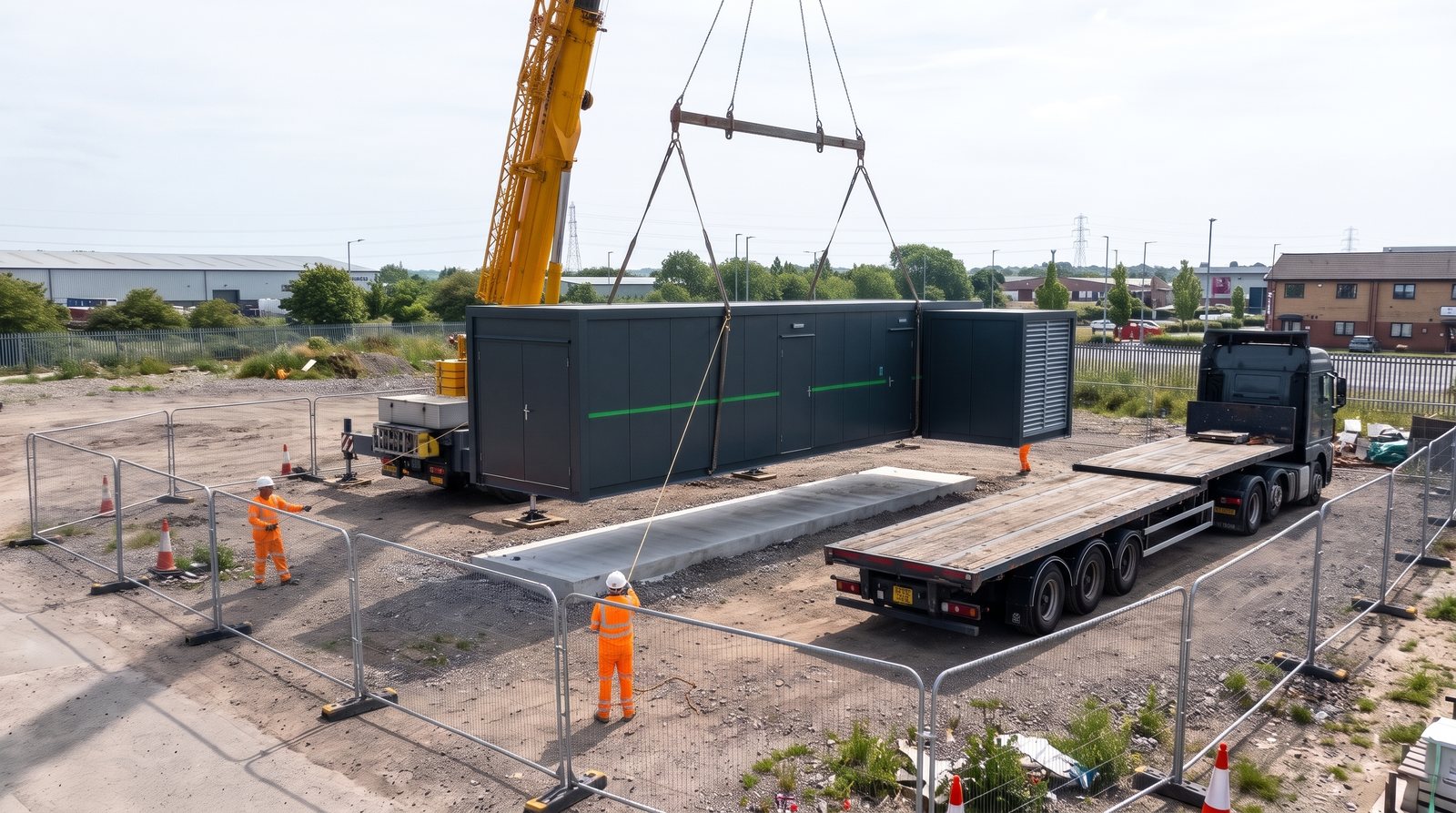
Because each unit is built off-site and delivered complete, with its own power and cooling, deployment is measured in weeks, not grid-queue years.

Concept visualisation: a module being lifted by crane onto its prepared base
Concept visualisation
Commercial options

You buy the module. We run the compute.

You own the module. The compute inside it is delivered as a service — we lease the nodes, maintain them, and replace them with current-generation hardware every term, automatically. Every module is sold with the managed-support contract attached. We do not supply modules for customers to run themselves, and we do not lease the module itself: you own the asset, we stay accountable for keeping it running.

🛠️

Supported purchase — the way we sell

You own the module. We monitor it, maintain it, and manage energy and security under SLA.

🤝

One accountable party

You own the asset; we are answerable for it running. No split responsibility when something fails at 3am.

🔄

Lifecycle support

A fixed annual fee keeps the module monitored, maintained and secure for its whole working life.

⚡

Compute as a service

You never buy the compute, and never buy a refresh. We lease the nodes and replace them with current-generation hardware every term — seven generations over twenty-one years, not four.

➕

Layered services

Add edge-AI inference and managed services on top of any module as your needs grow.

🪶

Why the cheque is smaller

Taking the compute out of the purchase means you pay a fraction of what buying the compute outright would cost, and moves the residual and obsolescence risk of the hardware off your balance sheet and onto ours.

Not sure which fits? Talk to us — we'll match the package to your sites, workloads and budget.

Why we're different

Built for the efficient edge — not the megawatt race

Most of the industry is chasing ever-larger, power-hungry facilities. We do the opposite: small, grid-light, efficient units placed exactly where the demand is.

Power
The field: grid-tied, or reliant on stranded grid power.
Green EDGE: grid-light — designed for contracted renewable supply + battery buffer.
Footprint
The field: megawatt halls chasing large-scale AI.
Green EDGE: micro modules sized for the real edge — towers, exchanges, urban sites.
Compute
The field: power-hungry racks and heavy cooling.
Green EDGE: efficiency-first compute — the same resident model capacity inside about 17× less facility power.
Workloads
The field: centralised capacity, far from users.
Green EDGE: 5G/MEC, edge-AI, smart-city and caching — next to users.
The efficiency is not primarily a saving

It is what makes the siting possible — and the siting is what makes the capacity obtainable at all.

~52 kW
our facility load
~1,408 kW
the same model capacity held on GPU infrastructure
1.50×
less energy per unit of memory bandwidth delivered
4 hours
contracted autonomy, sized to the full facility load

Generating tokens from a large language model is limited by memory bandwidth, not raw arithmetic — the weights must be read for every token produced. Unified-memory silicon holds the model and reads it fast for very little power. Holding the same capacity in high-bandwidth memory on conventional GPU infrastructure needs roughly 1,408 kW of facility power: a data hall, three-phase supply, mechanical cooling and a grid connection quoted in years. Ours is a 52 kW load — small enough that a new grid connection is not the starting point for a deployment. That is why we can put capacity where conventional infrastructure cannot go — and why a competitor holding a place in a connection queue cannot shorten it.

Comparator: published NVIDIA DGX H100 specification at a typical enterprise PUE, against Apple’s published measured maximum of 385 W per M5 Ultra node. Both figures are published, and Apple’s is a stress test, so the comparison is conservative. The model capacity compared is what one module holds at 512 GB per node. We make no claim about the cost of a token — that is set by the model providers.
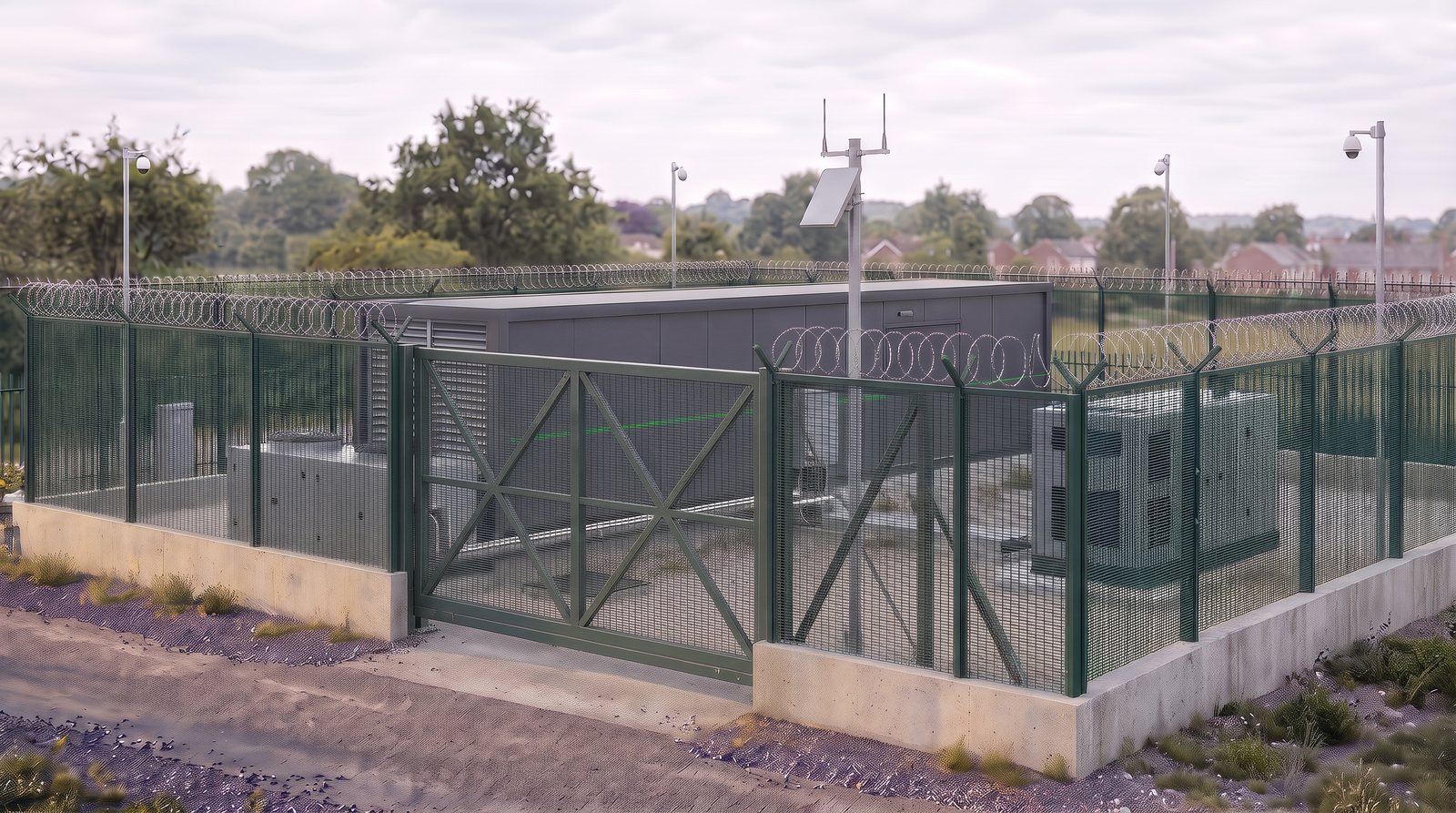
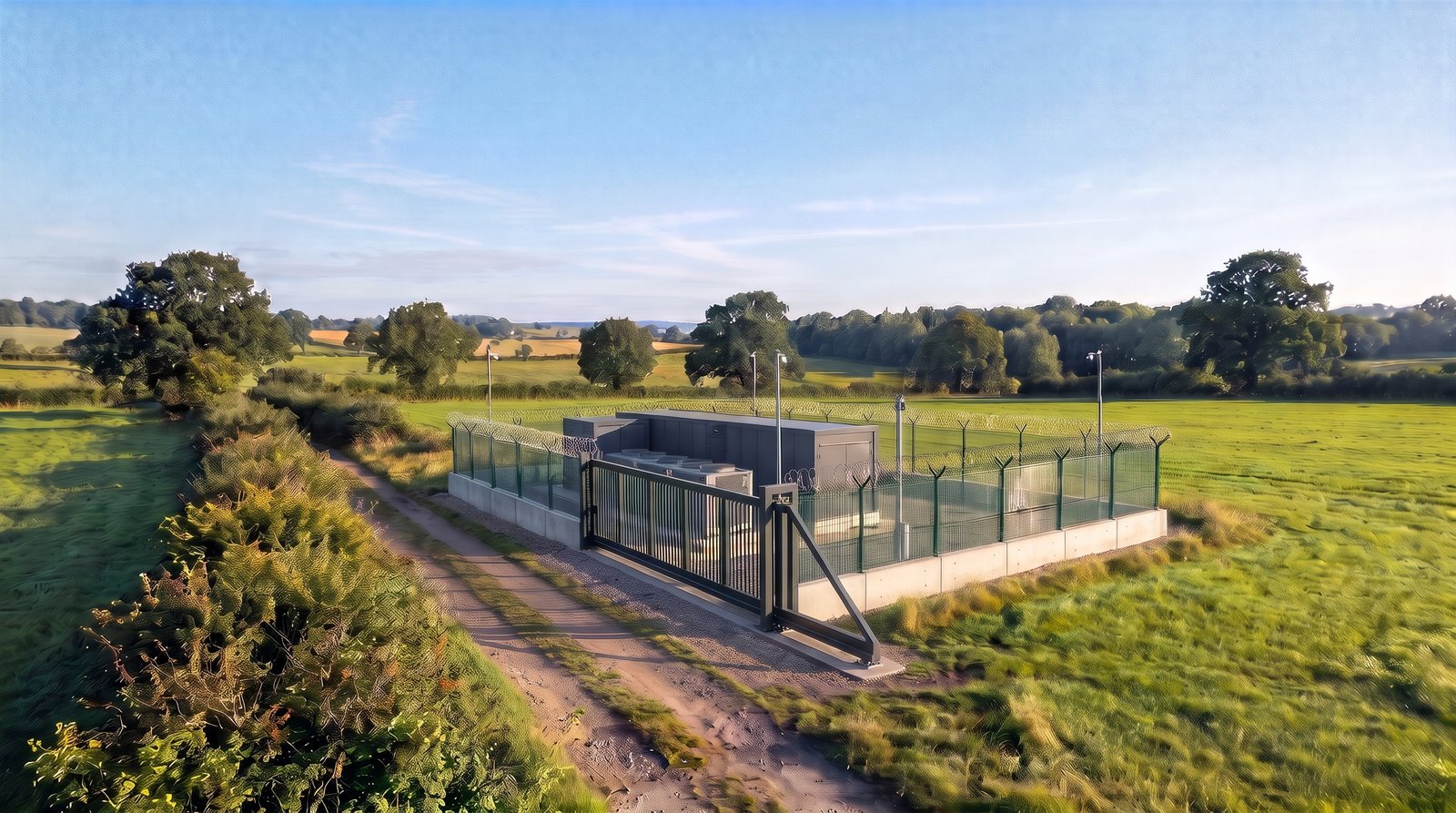
Concept visualisation: a secure Green EDGE Data compound in open countryside
Concept visualisation
Sustainability

Green by design, not by offset

Sustainability is built into the unit economics, not bolted on. A design for contracted renewable supply, a battery buffer, a low power draw and minimal cooling mean a low PUE and a genuinely smaller footprint per unit of compute.

Renewable supply Battery storage Low PUE Scope-3 friendly Grid-light
Where we operate

UK, Ireland & Europe

United Kingdom

Our primary market now — data centres are Critical National Infrastructure, and high power prices and grid queues reward an efficient, grid-light model.

Ireland

A distinctive niche — small, renewable-powered modules fit where large builds face grid constraints around Dublin.

Europe

The scale opportunity — hub saturation plus fast-growing secondary markets and strong sustainability and sovereignty drivers.

About

Sustainable, secure edge infrastructure for the digital age

Green Data Developments Ltd, trading as Green EDGE Data, is a capital-light distributed edge platform — delivering deployable, low-power sovereign & enterprise edge, sold, supported and refreshed with a managed energy-and-security operating layer, across the UK, Ireland and Europe. It runs customer-funded first, with a contracted recurring annuity. Our edge is the combination competitors can't easily match: grid-light, efficient and rapidly deployable, backed by proprietary energy-management and orchestration technology.

Environmental stewardship Security Innovation Customer partnership
For investors — we're raising to scale clean edge capacity across the UK, Ireland and Europe. We welcome enquiries from institutional, professional and high-net-worth investors. Talk to us about investing.
Funding & ecosystem

Funded for the efficient edge — inside the Cambridge deep-tech cluster

We're raising a £5.30m seed to scale clean edge capacity across the UK, Ireland and Europe — stretched by non-dilutive grants and R&D incentives, de-risked by the Cambridge deep-tech ecosystem.

🎯

Non-dilutive: grants & R&D

Innovate UK sector competitions, KTP and Ofgem SIF, Eurostars / Horizon Europe, plus R&D tax credits and Patent Box — cost-share that stretches the equity.

🚀

Accelerator route

A route through a Cambridge deep-tech accelerator: programme, seed investment and a strong investor network.

🔒

Intellectual property

Our defensible position is the renewable-coupled control and energy-management layer, not the enclosure and not the silicon. That layer is the subject of an active pre-filing patent review with UK patent attorneys. We do not publish its detail, and we make no claim to any granted or pending right.

🌍

Cambridge ecosystem

A dense support cluster on our doorstep — corporate / VC counsel, R&D-tax specialists, patent attorneys, innovation hubs and founder platforms.

£5.30m seed Grants + R&D + Patent Box Accelerator route Cambridge deep-tech cluster
Equity + grants + accelerator, all inside the Cambridge deep-tech cluster — more runway per pound and a credible route to Series A. Talk to us about investing → Non-dilutive funding is cost-share and partner/consortium-dependent. Not financial, investment or tax advice.
Investors

Institutional and professional investors

We are raising a £5.30m seed. Investor materials are provided directly on request — they are not published on this site and cannot be downloaded from it.

What you receiveAn executive summary and an investor pack, provided directly by us.
How it worksTell us who you are. We reply personally, and share materials under a non-disclosure agreement.
Nothing is gated hereThis page holds no confidential information. There is no download and no log-in, by design.
TimescaleWe aim to respond within two working days.

We use these details only to respond to your enquiry. This page is an enquiry route. It is not an offer or invitation to acquire securities, and nothing on it is financial, investment or tax advice.

Team

The people building Green EDGE Data

A team spanning renewable energy, the grid, edge computing, engineering delivery and deep-tech AI.

Jon Tancock

Jon Tancock

Co-founder & CEO

MD of OLR Consulting and former Director of Renewable Energy Technologies UK. 30+ years in strategy, funding and business development.

LinkedIn ↗
Neil McNeill

Neil McNeill

Co-founder & CTO

Enterprise & cyber-resilience architect; ex-Head of Technology at Smarter Grid Solutions (distributed-energy control), UK Power Networks and Maersk.

LinkedIn ↗
Mark Thomas

Mark Thomas

Director of Engineering Operations

Chartered engineer, 20+ years. Renewable power — solar PV, battery storage and on-site generation; earlier construction delivery (ex-VINCI).

LinkedIn ↗
Specialist Software Developer

Specialist Software Developer

Renewable-energy optimisation software

10+ years leading agile product teams and delivering large-scale, multi-£m software programmes for major energy & technology organisations — energy-data platforms, control & optimisation systems, and end-to-end product delivery.

Matt Burkitt

Matt Burkitt

Strategic Business Advisory & Technical Partner

Founder of Dimension Technologies (deep-tech AI) and co-founder of Cambridge AI Social; UKAI member — AI depth, policy and investor networks.

LinkedIn ↗
Contact

Let's talk edge

Tell us about your sites or your workloads and we'll show you how fast clean edge capacity can be live.

Address71-75 Shelton Street, Covent Garden, London, WC2H 9JQ, United Kingdom
HoursMon–Fri, 9:00–17:30 (UK)